I grew up in a one-room house in Pune where mornings didn't start with school alarms or the smell of breakfast. They began with shouting. Glass breaking. My father's voice slurring with alcohol. My mother crying quietly in a corner. Until I was six, that was my normal. My only goal each day was survival, to make myself small enough that the chaos wouldn't find me.
"That silence felt like oxygen."
In our family, poverty wasn't new. It had been passed down like an heirloom. My father struggled with mental health and addiction, and that combination turned our home into a battleground. But my mother was quietly nursing a different kind of dream. She had studied till 12th, done well, and then, like so many girls around her, had been married off young into a life she didn't choose. She understood exactly what she had lost. And she decided I would not lose the same things.
So she left my father. In our community, a woman leaving her husband is almost an act of rebellion. It meant walking away from whatever fragile financial security we had and becoming the only earning member, with no guarantee of what came next. But she did it. She picked me up and started over in a smaller, quieter room where the walls were thin but the nights were peaceful.
The first night in that new house, I lay down and realized something strange. There was no shouting. Just silence. That silence felt like oxygen.
My mother was obsessed with one idea: the future would belong to those who could speak English. Everyone around her said not to overreach. But she wouldn't budge. She saved from every side job and managed to put me into a private English-medium school. Children arrived in cars with cartoon water bottles and colourful tiffins. I walked in with my simple bag and bhaji-chapati, staring at their neatly cut fruits, wondering why we couldn't have those things. That was my first introduction to feeling less than.
When the private school fees became impossible, she transferred me to a government school. On paper, it looked like a step down. But when I walked in, something inside me relaxed. The kids there were like me. Their parents were drivers, domestic workers, security guards. For the first time, I didn't feel like an outsider who had sneaked into someone else's life.
Then another door opened. My teachers announced that a new school was starting: K.C. Thackeray Vidya Mandir, an Akanksha school. English-medium, high-quality education, and the most unbelievable part, everything from uniforms to books would be free. Admission was merit-based, and my mother took it more seriously than anything else. "If you get into this school, your life will be different," she told me. I didn't fully understand different, but I understood the way her eyes lit up when she said it.
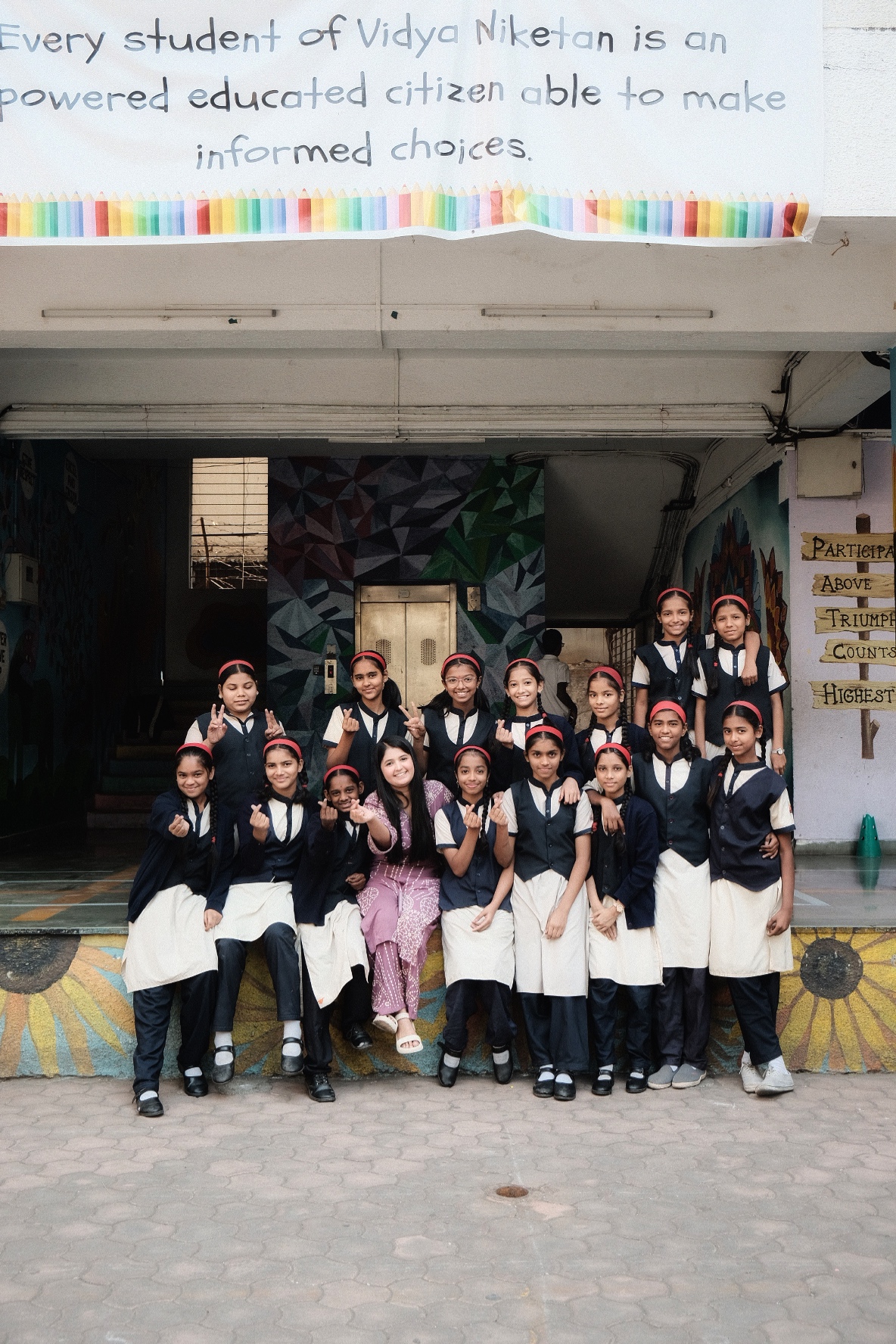
The day the results went up, my mother picked me up in her tired arms and said, "Check if your name is there." My name was the first one. I shouted, "I see my name!" Her smile in that moment is one of the clearest images in my mind.
At Akanksha, I saw something I had never seen before: teachers standing at the gate, smiling, giving high-fives. In my world, teachers waited inside classrooms, appeared only to scold or mark homework. But here they were outside, greeting us like guests they actually wanted. The school was saying, without words, you are safe here.
One teacher, Puneet bhaiya, changed how I saw my own story. During a unit on inspirational leaders, he told me he wanted to interview my mother. I was stunned. Leaders were people on TV, not women who mopped hospital floors. But he insisted. He came home with a small recorder, and my mother, speaking in Marathi, shared things I had never fully heard before. Her own childhood. Her early marriage. The decision to leave. The exhaustion. The one dream that kept her going.
He played that recording in class as an anonymous story. My classmates didn't know it was my mother. They only heard about a brave woman who walked out of an abusive marriage and dared to dream beyond survival. Sitting there, listening to them admire this woman, I saw my mother differently. She wasn't just the person packing my tiffin. She was the reason my life had turned in a different direction.
From that small school, my path stretched across continents. I went to UWC, then to Germany, then to the United States, where I became the first person in my family to complete college. I sent photos from convocation back home, imagining my mother's face as she looked at them.
People sometimes look at that journey and assume I must be fearless. The truth is quieter. I spent so many years trying not to take up space that even today, success sometimes feels like an accident.
But then I remember my mother in that tiny room, believing in a future she had absolutely no evidence for. All she had was faith, in education, in English, in her daughter.
Everything I am today exists because she believed before I could.